AI Agents for SEO: They Do the Legwork, You Keep the Decisions
SEO is getting more automated, and a lot of it deserves to be. Pulling keyword lists, auditing titles, finding pages that should link to each other, drafting a monthly report – that is research, analysis and tidying, repeated forever. Exactly the kind of work an AI agent can take off your hands.
The reel behind this article maps fifty such agents across eight areas of SEO. Its most important line is not about any of them, though. It is this: agents research, analyse, organise and draft – and you keep the decisions. The goal is not to replace SEO judgement. It is to spend less of your week on the repetitive part so there is time left for the part that needs a person.
The agent loop, and where you sit in it
Every agent on a map like this does some combination of the same four verbs. The fifth column is the one that never gets automated.
| 1. Research → | 2. Analyse → | 3. Organise → | 4. Draft → | 5. You decide |
|---|---|---|---|---|
| Gather
Keyword ideas, competitor pages, questions people ask, what already ranks. |
Find the pattern
Which pages underperform, which topics cluster, where the gaps are. |
Structure it
Clusters, content calendars, link maps, prioritised to-do lists. |
First versions
Briefs, outlines, meta descriptions, report summaries. |
What actually ships
Which topics, which claims, which links, what gets published under your name. |
That last column is not a formality. The difference between SEO that compounds and SEO that eventually gets a site penalised is almost always a human decision that was skipped because the draft looked finished.
Eight areas, what to hand over, what to keep
The reel’s eight areas, with the part an agent does well, the part that stays with you, and what each area means for a channel rather than a website.
| Area | Hand to an agent | Keep for yourself | On a YouTube channel |
|---|---|---|---|
| Strategy | Competitor summaries, gap analysis | Which audience you serve and what you refuse to chase | What the channel is for |
| Keywords | Idea lists, clustering, question mining | Whether real demand exists behind a phrase | The words viewers actually type into search |
| Technical SEO | Audits, broken-link lists, metadata checks | Any change to how the site is built or indexed | Titles, descriptions, chapters, captions |
| Content | Briefs, outlines, first drafts | The argument, the facts, and the final edit | Scripts |
| Internal linking | Finding pages that should point at each other | Whether a link genuinely helps the reader | End screens, cards and playlists |
| Link building | Researching who covers your topic | Every piece of outreach, and any exchange of links | Collaborations and mentions |
| GEO & AI search | Checking how AI answers describe your topic | Whether your content is genuinely the clearest source | Being the video an answer engine cites |
| Local & reporting | Monthly reports, trend summaries | What the numbers mean and what you do next | The monthly record of what worked |
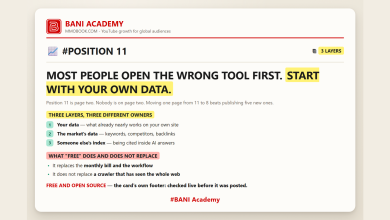
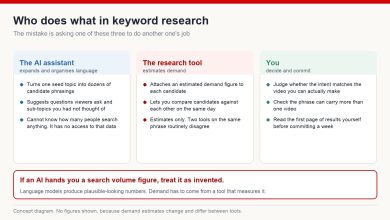
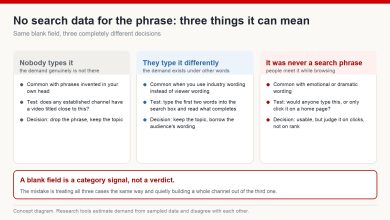
The keyword row is where people most often let an agent decide for them, and it is the one where that goes wrong fastest. An assistant can generate a hundred plausible phrases in seconds; it cannot tell you whether anyone searches for them. We wrote the whole of that argument in using AI for keyword ideas, and why it cannot tell you demand.
The post this came from
Watch the reel
The full map of fifty agents across eight areas. Posted on the BANI Academy page.
Where automation gets you penalised
This is the part most agent maps leave out, and it is the part that decides whether automation helps or hurts. Search engines do not penalise tools. They penalise patterns – and automation makes some of those patterns very easy to produce by accident.
| The tempting shortcut | Why it backfires | The safe version |
|---|---|---|
| Publishing pages in bulk from a template | Search engines treat large volumes of low-value pages made mainly to rank as spam, however they were produced | Agents draft; a person decides which few pages deserve to exist |
| Automated link outreach | Mass messages burn relationships, and exchanging links to manipulate rankings breaks search guidelines | Agents research who to contact; you write to them yourself |
| Auto-applying technical fixes | One wrong rule can hide a whole site from search overnight | Agents produce the list; changes go through you |
| Generated reviews or local listings | Fake reviews are against platform rules and, in many places, the law | Agents summarise genuine feedback; they never write it |
| Letting an agent assert facts | A confident error on a page that ranks spreads further than a correct page nobody sees | Every factual claim checked against a source before publishing |
If you are connecting an agent to live systems – a site, an analytics account, a search console – start read-only and widen access only for specific tasks. The reasoning is laid out in stop pasting, and it applies doubly when the thing on the other end is your search visibility.
A word on GEO and AI search
The newest area on the map deserves an honest note. Getting cited in AI-generated answers – sometimes called generative engine optimisation – is real and growing, and nobody has a settled playbook for it yet. Claims about exactly how answer engines choose their sources should be treated as early observations, not rules.
What does seem consistent is unglamorous: clear, specific, well-structured content that answers a question directly is easier to quote than content that circles it. That is also what ranks in ordinary search, and what holds viewers on a video. There is no separate trick to learn – which is good news, because the same work pays three times.
What this looks like for a channel
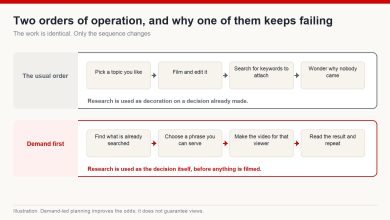
Most readers here run a channel first and a site second, so it is worth translating. YouTube search is still search: people type words, the platform matches videos to them, and the ones that satisfy the viewer keep being shown. The keyword system we use is set out in the YouTube keyword system, and the case for planning a whole channel around demand rather than ideas is in demand first.
Agents fit neatly into that: one to mine questions from comments and search suggestions, one to cluster them into topics, one to draft a brief per video, one to summarise the month’s numbers. The decisions – which topic, which promise, which claim – stay yours, exactly as in your channel has six departments. And when the research was right but the video still underperformed, the reasons are usually outside SEO altogether, as we found in the research was right and the video still failed.
Frequently asked questions
Will AI agents replace SEO specialists?
They replace a lot of the repetitive hours. They do not replace the judgement about what is worth publishing, which is most of what made someone good at SEO in the first place.
Where should I start?
Reporting. A monthly summary of what moved is low-risk, saves real time, and makes every other decision better informed.
Is AI-written content penalised?
Search engines say they judge usefulness, not the tool used. What gets penalised is large volumes of low-value pages made mainly to rank – which automation makes easy to produce by mistake.
Do I need fifty agents?
No. Most sites and channels need three or four covering their most repetitive tasks. The map is a menu, not a checklist.
Automate the most repetitive task first
Look at your last month of SEO work and find the task you did most often with the least thinking. That is your first agent. Let it research, analyse, organise and draft – and keep the fifth column firmly yours.
Spend the time it gives back on strategy, and on the one thing no agent can produce: content genuinely worth finding.
Learning a lot does not make anyone good. Doing a lot does.
If you want the structure that makes that happen on schedule, that is what our free challenge is built for: no barrier to entry, a genuine commitment to action, and a refundable commitment fee you get back when you finish. You are not paying for the knowledge. You are betting on yourself finishing, and we hold the stake.
Which group would save you the most time? Tell us in the comments on the original reel.
For more on building channels for English-speaking audiences, that is what we work on at mmoyoutube.com.
2 Comments